Website: https://erasmus-plus.ec.europa.eu/projects/search/details/2023-3-EL02-KA152-YOU-000177761
Start date 01-03-2024
End date 28-02-2025
Budget: 21.844,00 €
Coordinator: TsaMpa
Partner: Asociación Tilos Asturias (ES) , Mladejki centar za razvitie- Vzaimopomosht (BG) , ICSE & CO (IT) , Asociacija “Tvarumo namai” (LT)
Objectives
Lbox, Learning out of the box, was designed to address the growing levels of youth anxiety and disappointment regarding unpleasant school experiences and grade failure. We tackled this issue by creating and disseminating experience with detailed information about how to get into life changing non formal educational activities, with youngsters who are experienced and who didn’t have the possibility to otherwise get access to, either by fewer opportunities and backgrounds, social or geographical problems, etc. As this is a problem that affects everyone across Europe, all the partners agreed that it’s a topic that should be addressed and tackled in order to change these youth’s issues by society. All the partners of this YE were experienced with non formal activities, inclusion, arts for educational purposes, ICTS in education, learning disabilities and education generally. We tackled this issue by creating and disseminating experience with detailed information about how to get into life-changing non-formal educational activities.
All partners were committed to fight discrimination in education and offer to youths life-changing experiences. Working together with all partners, meeting personally and through internet conferences, we concluded that, day by day, youngsters from all across Europe get more stressed out and confused if they do not “fit” in the education system of their country. Through non-formal and informal education, with a special attention to youngsters from a fewer opportunities background and young migrants who had less access to information and were experiencing a challenging transition into a balanced adult life in community. “Lbox” brought everyone together, regardless of age, gender or social origin. It promoted dialogue, open discussion, debates and knowledge sharing, and created an environment where they could develop solutions and learn from each other. In parallel with this awareness, we promoted an integration aiming to prevent individualism, discrimination, intolerance and violent radicalization.
We highly achieved the following objectives which were defined at the beginning of the project.
-Provide opportunities for young people with fewer opportunities through sport-based non-formal education, promoting diversity, intercultural dialogue, and common values of freedom.
– Raise awareness on the importance of variety in education methods and that from everyone and everything can teach you something new and important;
– Develop skills and competencies on youngsters to become active learners and European citizens;
– To make use of non-formal activities to reach out to marginalized young people, youngsters from underprivileged backgrounds and people with disabilities or fewer opportunities.
– To empower youth through communication as a strategic tool to nurture tolerance and respect of human rights, inciting active civic participation against violence, discrimination, and social exclusion.
We successfully developed an 8 days (including the travel days) youth exchange, where we got deeper into the topic and more easily raised the desired awareness and inspired youngsters to be open-minded and they are now capable of learning out of the box regarding the way of learning as well as the learning tools. Now participants have enough knowledge to identify their personal learning style, so they are able to use it in their lives in order to have better results. Also, all the participants understood that there are many factors which affect the learning style. Everyone is different and everyone has something to teach you, something unique, this was the main aim of the project.
Implementation
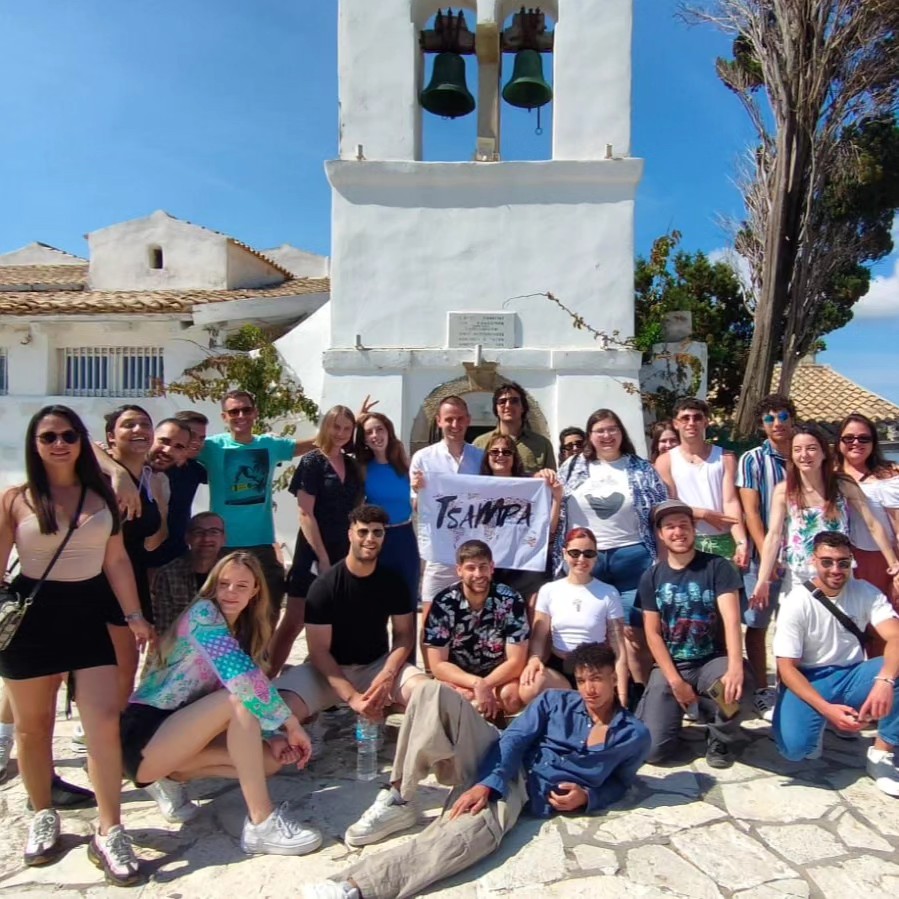
We carefully and targeted selected 31 youths from 5 different countries (Spain, Italy, Lithuania, Bulgaria and Greece) suitable for this YE and preferably those who didn’t have many opportunities to experience other cultures outside the borders of their countries to actively contribute to filling European mobility and cultural gaps to foster independence, wellbeing, and inclusion.
These selected participants were chosen from a list of candidates. Ten of the 31 participants were facing difficulties and they were youths with fewer opportunities. More specifically, one participant was facing cultural differences, four participants were facing barriers linked to education and training systems, one participant had economic barriers, one participant was facing social barriers, one youth had geographical barriers and two youths were facing barriers linked to discrimination.
Also, we managed to keep the gender balance among the participants with 14 girls and 17 boys.
The age range was 18-30 years old for participants, 18-25 years old were 15 participants, 26-30 years old were 10 participants. The 6 group leaders were 21- 43 years old and adequately experienced. All the participants were strongly motivated to get more involved in non-formal educational activities and had no or low previous exchange experience. The majority of the participants were teachers, youth trainers and workers, professors, ICTS specialists, artists (painters, musicians, singers, actors) and the rest of them were university students.
We successfully succeed the following objectives:
-To make use of arts and non-formal activities to reach out to marginalized young people, youngsters from underprivileged backgrounds and people with disabilities or fewer opportunities.
-To actively promote social inclusion of youngsters, promoting diversity, intercultural dialogue, and common values of freedom while inspiring positive impacts on learning attitudes and lifelong learning.
-To empower youth through productive studying methods and techniques as a strategic tool to nurture tolerance and respect of the others as well as to themselves, inciting active civic participation against mental and psychological issues, discrimination and social exclusion.
Through non-formal and informal education, with a special attention to youths from a fewer opportunities background and young migrants who had less access to information and were experiencing a challenging transition into a balanced adult life in community, this project brought everyone together, regardless of age, gender or social origin, promoting dialogue, open discussion, debates and knowledge sharing, and creating an environment where they developed solutions and learnt from each other. The activities, debates, creative theater, dancing for inclusion boosted the sense of teamwork, cooperation, and communication among them as they worked together to achieve the objectives. This also raised their ability to communicate and their public speaking skills, preparing them for future situations making them more comfortable in front of others. Reflection-group sessions supported the collective and individual reflection on the skills developed during the YE, enabling the formal recognition of these competencies through instruments like the Youthpass.
Results
By creating this knowledge blog, using the TikTok app, we amplified the results to reach even more young people from fewer opportunities backgrounds, marginalized, in the risk of social exclusion, disabled people and other vulnerable groups. We used it since it was familiar for youths. The app has resonated with young people due to its dynamic and interactive nature, allowing them to express their creativity and connect with peers. According to recent statistics, the majority of TikTok users are under the age of 30, with teenagers comprising a significant portion of the user base.
The purpose was to have an abstract with all the activities and their objectives in order to make it easy to use them in their personal or professional lives or to disseminate them with friends and colleagues. All the partner organizations shared the articles, TikTok videos and the photos/posts with their members, their colleagues, their friends and their communities.
The impact on them is exponential to that expected on the YE participants. The participants have enough knowledge to develop and implement non-formal activities using arts and technology in their local communities and spread this knowledge among others in order to fight the stereotypes of educational and learning methods. We produced daily TikTok videos with all activities and all learning outcomes of the project and we spread it through the internet pages, partners and local associations to make sure that everyone gets access to this info.
We produced TikTok videos, photos & articles with all activities and all learning outcomes and we spread it through the internet pages, partners and local associations to make sure that everyone got and continued getting access to this information.The partners kept on collaborating and contributing to new Erasmus+/international projects through enlarged networks and cooperation endeavors to allow youths from local communities to experience and benefit from similar activities.
In this context, the results/outcomes of the mobility were:
•Greater independence, sense of responsibility, self-awareness, self-confidence, and motivation
•Higher involvement and participation in their teaching methods taking in mind their personal learning style as well as its characteristics.
• Increased awareness for inclusion in education focusing on the components of the different learning styles and the different characteristics of every learner.
•Creation of a strong network of active youths/ learners for awareness and dissemination of the European values, with an acute focus on promoting diversity, intercultural dialogue, and common values of freedom to fight marginalization and disability-driven social exclusion
•Consolidated acquisition of useful soft skills (organization, understanding, patience, self development, teamwork, effective communication, small-scale event, and project management)
•Increased propensity for multiculturalism, awareness for inclusion, self-understanding, solidarity, active citizenship and democratic participation at local, national and EU level
•Increased awareness for the necessity of arts in education as well as the out of the box thinking of every youth.
As the main vehicles of information and awareness on social inclusion, disability, and tolerance, participants were not only benefited as individuals, through the stated outcomes but also became catalysts of change in their own local communities. They were better prepared for adult life and integration into the labor market, and more aware of their EU citizenship and of the importance of inclusion, self-knowing and multiculturalism. The project allowed youths from disadvantaged backgrounds to have access to knowledge, skills, and experiences otherwise inaccessible to them, in an open, EU, friendly and collaborative environment.
•Increased awareness of different learning styles, different teaching methods, the role of arts and ICTS in education;
•Increased inclusion and solidarity initiatives and self-esteem and understanding;
•Promotion of tolerance, multiculturalism and the principles of equality;
•Increased involvement in community life and active citizenship;
•Increased awareness about the opportunities offered to young people in the EU, especially by the Erasmus+;
The target group was identical to the selected participants for the YE, amplifying the results to reach even more youths from fewer opportunities backgrounds, marginalized, in the risk of social exclusion, disabled people and other vulnerable groups. We had a strong impact in the general population, more aware of the needs and gaps in the current context of social inclusion, different learning styles, discrimination and marginalisation: all the outputs were published through the social media of all the partners and many of the participants’.
